
Frequently Asked Questions

Frequently Asked Questions

Pre-KG: Children must be 3 years old by school age cut-off date.

KG1: Children must be 4 years old.

KG2: Children must be 5 years old.

These age requirements follow UAE educational guidelines.

Our Kindergarten follows the California Common Core State Standards (CCSS) for English and Math. In KG2, Science is delivered in alignment with the NGSS (Next Generation Science Standards). Additionally, we follow the MOE National Document for:

  • Arabic Language
  • Islamic Education
  • Social Studies

Learning in the KG section is delivered through play-based and hands-on activities that are developmentally appropriate for young children.

We understand that starting school is a big step. We support children by:

  • Creating a warm and welcoming classroom environment
  • Gradually helping children adjust to routines through engaging, age-appropriate activities
  • Implementing a Social-Emotional Learning (SEL) program to support children's emotional well-being and confidence
  • Encouraging friendships and social interaction, including assigning a buddy system
  • Providing extra emotional support when needed
  • Maintaining close communication with parents

Pre-KG

  • Social skills and independence
  • Early language development
  • Basic counting and shapes
  • Fine Motor Skills
  • Learning through play and exploration

KG1

  • Letter recognition and phonics
  • Early reading skills
  • Number recognition and simple math concepts
  • Writing simple words
  • Developing confidence and communication

KG2

  • Reading simple sentences
  • Writing short sentences
  • Addition and subtraction
  • Problem solving and critical thinking
  • Preparing for Grade 1 learning expectations

In KG2, the focus is on developing:

  • Early reading and writing skills
  • Mathematical thinking
  • Independence and responsibility
  • Listening and following instructions
  • Confidence in participating in class

We also place strong emphasis on preparing students for a smooth transition to Grade 1 by explicitly teaching the essential skills they will need by the end of KG2. This includes building independence, classroom routines, and foundational academic skills.

To further support this transition, we organize a "KG Walk" to familiarize students with the Grade 1 environment. At the beginning of the academic year, KG teachers are present alongside students to provide reassurance and continuity. Additionally, Grade 1 incorporates center-based learning to ensure a developmentally appropriate and supportive start for all students.

Our goal is to ensure children are academically, socially, and emotionally ready for primary school.

Each classroom has:

  • 25 students
  • 1 qualified teacher
  • 2 teaching assistants
  • 1 nanny

This team structure allows us to provide close supervision, individual attention, and strong support for every child.

Children learn a variety of subjects including:

  • English
  • Mathematics
  • Science and Inquiry
  • Arabic
  • Islamic Education
  • Social-emotional Learning
  • Kitchen
  • STEAM
  • Physical Education

Yes. Children attend specialist lessons such as:

  • Physical Education (PE)
  • Kitchen
  • Library

These lessons help develop creativity, physical skills, and confidence.

Children are assessed through:

  • Classroom observations
  • Learning activities and tasks
  • Portfolios of children's work
  • Regular progress assessments
  • Diagnostic assessments done termly at the beginning and end of each semester

Parents receive reports and feedback on their child's development and learning progress.

A typical day includes:

  • Morning circle time
  • Literacy and numeracy activities
  • Learning centers and play-based exploration
  • Specialist lessons
  • Snack time
  • Outdoor play
  • Storytime and reflection

The schedule is designed to keep children engaged, active, and happy.

Parents are informed through:

  • Progress reports
  • Parent-teacher meetings
  • Regular teacher updates
  • Edunation/ MS Teams
  • Emails/Phone

We believe strong communication between school and parents supports children's success.

Our teachers are experienced in supporting young children emotionally. We help children by:

  • Providing comfort and reassurance
  • Encouraging friendships
  • Creating a safe and caring classroom environment
  • Working with parents to support the child's adjustment

If needed, the KG section's social worker devises an individual plan for the student.

All students are expected to be toilet trained.

Children benefit from being able to:

  • Use the toilet independently
  • Open their lunchbox
  • Pack their bag
  • Follow simple instructions
  • Take care of their belongings

Teachers continue to guide and support children in building independence.

Students should bring:

  • A healthy snack and lunch
  • A water bottle
  • School bag
  • Required learning materials

All students are expected to bring spare clothing.

Children's safety is our top priority. The school provides:

  • Secure campus supervision
  • Staff trained in child safety and first aid
  • Controlled entry and exit procedures
  • Careful supervision during all activities

Yes, school transportation is available for students who require it. Buses are supervised by trained staff to ensure children travel safely.

Teachers use:

  • Visual aids
  • Songs and storytelling
  • Interactive activities
  • Small group support

Children quickly develop confidence in English through daily communication and engaging learning experiences.

Each stage focuses on appropriate age development.

Pre-KG

  • Social development
  • Basic language skills
  • Play-based exploration
  • Fine motor development

KG1

  • Introduction to phonics and letters
  • Early reading skills
  • Number recognition
  • Beginning writing skills

KG2

  • Reading simple sentences
  • Writing short sentences
  • Basic addition and subtraction
  • Preparing children for Grade 1 expectations

Several communication channels are available to ensure effective communication between parents and the school. Parents may contact the school through email communication, telephone extensions via the school reception, scheduled face-to-face meetings, online meetings when required, and through the official school portal (Edunation).

Parents are encouraged to follow the school communication structure to ensure that concerns are addressed effectively:

Class Teacher: The first point of contact for daily academic follow-up, homework questions, and classroom behavior.

Grade Level Supervisor: Handles academic or behavioral concerns that require additional follow-up beyond the classroom level.

Social Worker: Provides support for student wellbeing, emotional concerns, and social development.

Section Supervisor or Head of Section: Addresses major concerns related to policies or matters that require leadership intervention.

Parents may communicate with teachers through the official school platform (Edunation), email communication, or by arranging an appointment through the school reception. Meetings may take place after school hours either face-to-face or online to ensure teachers have sufficient time to discuss students' progress and needs.

Parents receive regular updates through Edunation announcements, school circulars, newsletters, and official communication from the school. These messages include important information about academic schedules, activities, school events, and policy updates.

Yes. Parent-teacher meetings are scheduled during the academic year (three times) to allow parents and teachers to discuss students' academic progress, behavior, and overall development.

The school is open from Monday to Thursday. Students should arrive by 7:00 AM, while the first lesson begins at 7:25 AM. The school day ends at 2:20 PM. Elementary students have a 15-minute morning assembly, 8 sessions daily, 45 minutes each, with two breaks.

Yes. Morning supervision is provided by designated teachers and supervisors in the school premises before the start of the school day.

Parents are requested to follow the designated drop-off zones to ensure a safe and smooth arrival process. Students should exit vehicles quickly and proceed directly to their classrooms or supervised areas.

Students who arrive late must report to the school reception before joining their class. Late arrivals are recorded, and repeated unexcused lateness may require follow-up with parents to support improved punctuality and may eventually result in deduction from the students' conduct marks.

Students have two breaks daily.

  • The first is a breakfast break (25 minutes).
  • The second is scheduled around Dhuhr prayer time (45 minutes).

Both breaks are supervised by teachers and supervisors.

The school follows the American Curriculum, which focuses on developing strong foundations in literacy, mathematics, science, and critical thinking. The curriculum is enriched with Islamic values, character education, weekly Quran sessions, and opportunities for innovation and creativity.

Student learning is assessed through continuous evaluation including quizzes, projects, class participation, homework assignments, and formal assessments.

Report cards are issued twice during the academic year, at the end of each semester. Gradebooks are open all year for parents to check students' marks daily on Edunation.

Parents can monitor their child's progress through the Edunation portal, communication with teachers, and report cards.

Yes. Homework is assigned to reinforce the learning objectives covered in class and to help students develop independent study habits.

Parents can support their children by establishing a regular homework routine, providing a quiet study space, and encouraging the completion of assignments.

Parents are encouraged to communicate with the class teacher if their child experiences difficulty completing homework so that additional support can be provided.

Yes. Reading is strongly encouraged through classroom reading activities, accelerated reading platforms, guided reading sessions, and regular library visits.

Students visit the school library regularly and are encouraged to borrow books appropriate for their reading level. Borrowed books should be returned within the specified time so that other students can benefit from the library resources.

The Innovation Hub provides students with opportunities to explore Science, Technology, Engineering, Arts, and Mathematics (STEAM) through hands-on learning experiences, projects, and creative problem-solving activities. ASCS Elementary section has two venues: The Research and Innovation lab and the STEAM room to enhance innovation and STEAM education.

Technology is integrated into classroom instruction to enhance learning and support student engagement. As an Apple School, the elementary section incorporates digital learning tools that promote creativity, collaboration, and critical thinking. Students use their personal iPads as part of daily learning activities, including accessing digital resources, completing assignments, participating in interactive lessons, and developing research and presentation skills. Teachers guide students in using technology responsibly to support their academic growth and digital literacy.

Yes. As part of the school's commitment to innovative learning and its recognition as an Apple School, all students are required to have their own iPads for educational use after securing them by installing the Mobile Device Management license on them. The iPads are used during lessons to access learning platforms, complete digital assignments, collaborate on projects, and engage in interactive learning experiences. Parents are encouraged to ensure that the device is fully charged and brought to school daily so that students can fully participate in technology-enhanced learning activities.

The school follows a structured Behavior Policy that promotes respect, responsibility, and positive reinforcement. ASCS Positive Behavior Policy is shared with parents via Edunation.

Bullying is not tolerated. Any reported incidents are investigated promptly, and appropriate actions are taken according to school policy.

Yes. The school provides social worker and a psychologist who support students' emotional wellbeing and personal development.

Students are supervised by teachers and supervisors during lessons, transitions, break times, and school activities to ensure safety.

Students may request permission from their teacher to use the restroom during class. Students must keep the washroom pass, the clinic pass or the hall pass any time they are outside the classroom. Supervisors monitor corridors and common areas to ensure students' safety while maintaining appropriate privacy.

Students who feel unwell are sent to the school clinic for evaluation by the medical staff. Parents will be contacted if the student needs to go home or requires further medical attention.

Students are dismissed in an organized and supervised manner to ensure their safety. Parents pick up their children personally during dismissal time.

Yes, but parents must notify the school in advance and provide authorization for the designated person.

Supervision is provided for a limited time which is 30 minutes after dismissal while students wait to be picked up. Parents are requested to arrive on time to avoid delays.

Yes. Educational trips are organized to enhance students' learning experiences and connect classroom knowledge with real-life environments. Students have two trips a year; one each semester.

Students may participate in clubs, sports, competitions, and enrichment activities designed to support their talents and interests. ECAs are provided every Wednesday during school hours for 45 minutes. Sports and Quran programs are provided after school hours. Parents of students participating in after school programs should arrange home transportation for their children.

Yes. Elementary students are encouraged to develop leadership skills through activities such as class responsibilities, student initiatives, students' committees, and participation in school events.

To maintain a focused learning environment and to ensure fairness and inclusiveness among all students, birthday celebrations are not organized during the school day. While we value this occasion for every child, celebrations involving food, gifts, or class activities may unintentionally affect other students' wellbeing or create distractions during instructional time.

Yes. The school organizes celebrations and activities that recognize important cultural and national events to promote community values and student engagement.

Parents may contact the teacher, the assistant supervisor or school reception to check the lost and found area. Students are encouraged to label their belongings.

Students should bring only the materials required for learning unless instructed otherwise for special activities.

The school provides science labs, computer labs, art rooms, libraries, innovation lab, sports halls, and playgrounds.

Yes. School bus services are available for students.

Yes. Students must wear the official school uniform daily.

Repeated violations may affect the student's conduct record and require follow-up with parents. Repetitive violations will result in deduction of students' conduct marks.

Regular attendance is essential for student success. Absences must be reported and justified with appropriate documentation when required. Repetitive unexcused absences will result in deduction of students' conduct marks.

Teachers support students in completing missed work when the absence is officially excused.

The academic year includes Winter Break, Spring Break, and Summer Break, in addition to official holidays approved by the educational authorities.

Yes. The school is accredited by the New England Association of Schools and Colleges (NEASC).

Several communication channels are available to ensure effective communication between parents and the school. These communications are via emails, telephone extensions, direct face-to-face meetings, online meetings, and through our school portal (Edunation).

Grade-Level Supervisors: The first point of contact for academic or behavioral concerns, daily follow-up, and any questions related to your child's grade level.

Phase Supervisors (Middle School / High School): For matters that need escalation beyond the grade level, such as repeated behavioral issues, significant academic concerns, or student well-being.

Social Worker ( Middle School- High School): For matters related to students’ personal development, behaviour, learning difficulties, and emotional support.

Deputy Head of Section / Head of Section: For issues that remain unresolved after contacting grade and phase supervisors. This level addresses policy-related matters, school-wide concerns, or critical issues requiring leadership intervention.

Each class accommodates a maximum of 28–30 students.

The school canteen operates on a cashless system. Parents must download the HotOven App and add funds to their child's account. This system ensures students can purchase food without the need to carry cash. The daily and weekly pre-order option is available on the app. The food is collected by the child during the break in the canteen area.

Additional classes are provided only for Advanced Placement (AP) courses for high school students in high school.

Students have two breaks daily:

  • A breakfast break
  • A break for Al Dhur Prayer Time

The school follows the American curriculum, and the school calendar is run on a semester basis, not a term basis. ASCS has two semesters; each is 18 weeks.

The first semester starts in August and ends in January. The second semester starts in February and ends in June. The Winter Break and Spring Break come in between semesters.

There are three main breaks during the academic year:

  • Winter Break
  • Spring Break
  • Summer Break

All dates are subject to approval by SPEA (Sharjah Private Education Authority).

Yes. The school is accredited by the New England Association of Schools and Colleges (NEASC). ASCS is an Apple School.

Monday – Thursday: 7:10 AM – 2:35 PM. The first lesson starts at 07:30.

Report cards are issued twice per year:

  • At the end of semester 1
  • At the end of the academic year

Online learning is implemented only when officially announced by the authorities. The school does not provide online learning for individual cases.

Yes. The school provides a social worker/psychologist for each phase to support students' social and emotional well-being.

Discipline is maintained through the collaborative efforts of the pastoral team and social workers, who monitor student behavior and provide guidance when needed. The discipline and positive reinforcement system follows the school Behavior Policy that is shared with students and parents at the beginning of the school year.

Yes. The school has two career guidance counselors for middle and high school.

Yes. The school has three specialized science laboratories (Biology, Chemistry, and Physics), as well as a STEAM lab, Innovation lab, and dedicated computer labs.

Yes. The school provides indoor sports halls and outdoor playgrounds for student activities, for both boys and girls in addition to a swimming pool and a soccer field located in the new expansion of the building.

Yes. School transportation services are available.

Yes. The school organizes several educational and recreational trips for all students in all grades PreK- to grade 9.

Student progress is monitored through continuous assessment, quizzes, projects, class participation, and formal exams (midterms and finals). The school assessment calendar is shared with parents and students on the school management system, Edunation, at the beginning of each academic year. Parents have access to daily students' marks in all subjects.

Parents may communicate through the official school management system, Edunation, scheduled meetings, or by contacting the school reception/section supervisor to arrange an appointment after school, either face-to-face or online.

The school promotes a positive, respectful, and safe learning environment rooted in Islamic values, strong character development, and care for every student's wellbeing. Student safety and emotional welfare are closely monitored by supervisors, social workers, and school leaders, who work together to ensure that students feel supported and protected throughout the school day.

Students are regularly reminded that they have trusted adults they can speak to whenever they have concerns, whether academic, social, emotional, or behavioral. In addition, the school's Social Emotional Learning Program, which runs from PreK to Grade 9, provides structured support for students' wellbeing by helping them develop self-awareness, empathy, responsible decision-making, positive relationships, and resilience.

The school follows a clear positive behavior policy that promotes guidance, accountability, and progressive corrective action. Parents are informed of concerns promptly, and merits and demerits are recorded on the school management system for immediate parent access. The school also emphasizes restoration and reflection, while the ASCS Al Layyah Role Model Program reinforces positive behavior by recognizing students who demonstrate strong character, respect, and responsibility.

Bullying is not tolerated. Any reported incidents are investigated immediately, and appropriate disciplinary measures are taken.

Regular attendance is mandatory. Absences must be justified with valid documentation. Unexcused absences may affect conduct grades.

If a student's absence is valid and excused, it is the school's responsibility to repeat assessments and reteach the missed material. If absence is unexcused, students are responsible for completing missed work. Graded assessments are not automatically repeated unless officially approved.

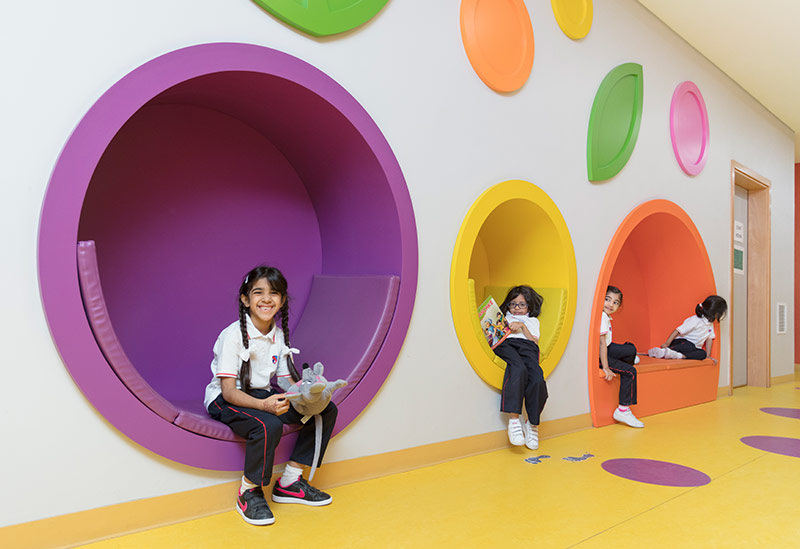
The school offers a wide range of well-equipped facilities that enrich students' learning and overall school experience. These include science labs, computer labs, art rooms, multiple libraries, sports halls, a swimming pool, and dedicated activity spaces for both boys and girls. All of these are provided within a beautiful, welcoming environment designed to support learning, creativity, and student wellbeing. The school campus is also furnished with attractive, child-friendly furniture that creates a comfortable and engaging atmosphere for students.

Yes, students are required to wear the official school uniform daily. Repeated failure to comply with the uniform policy may affect conduct grades.

Students may participate in clubs, competitions, leadership programs, sports, and community service initiatives.

Academic excellence, good conduct, leadership, and extracurricular achievements are recognized through awards and school ceremonies.

Parents receive regular circulars, newsletters, and announcements through the official communication platform (Edunation).

Ensuring regular attendance, monitoring homework (weekly scheme), maintaining communication with teachers, and reinforcing school values at home are key factors.